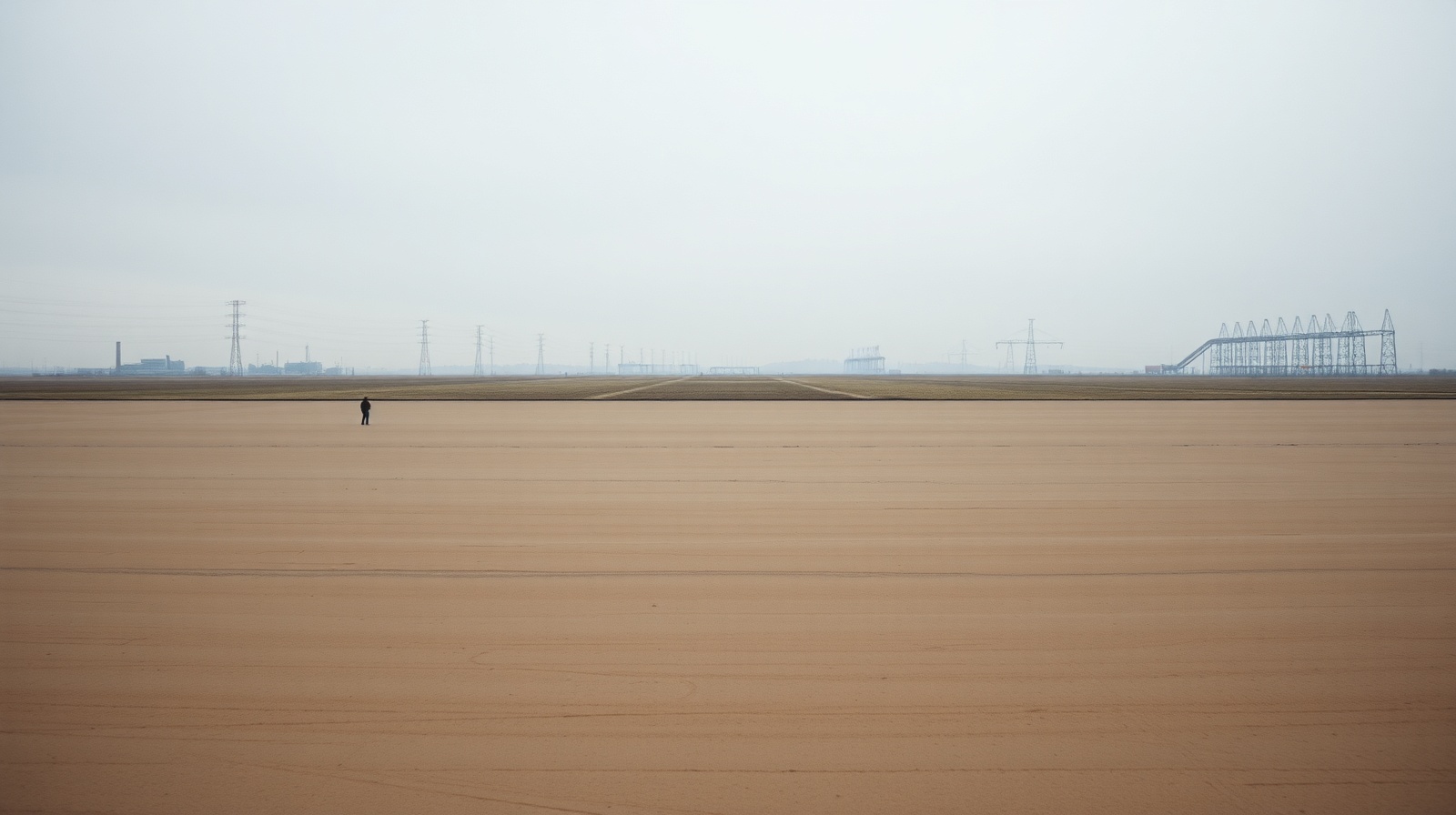
There is a moment in Béla Tarr’s Sátántangó — roughly forty minutes into the film’s seven-hour running time — where a cat is chased across a courtyard in the rain. The shot lasts several minutes. Nothing happens except the cat running, the rain falling, the mud being mud. If you are watching Sátántangó for the first time, this shot will either open something in you or close it. There is, in my experience, very little middle ground.
Slow cinema — the term is contested and slightly unfair, but it has stuck — refers to a tendency in art cinema roughly from the 1990s onward characterised by long takes, minimal cutting, sparse dialogue, and an approach to narrative that prioritises duration over event. Its canonical practitioners include Tarr, Tsai Ming-liang, Apichatpong Weerasethakul, Lav Diaz, Lisandro Alonso, Pedro Costa. Its critics argue that it is elitist, inaccessible, and sometimes — the charge is not entirely wrong — self-congratulatory.
What Duration Does
The defenders of slow cinema tend to make phenomenological arguments: that extended duration changes the viewer’s relationship to the image, that boredom — if that’s what you call it — is itself an experience the films are interested in creating, that the long take forces a quality of attention that conventional editing forecloses. These arguments are true, but they can be made too abstractly.
What duration actually does, in the best of these films, is make time visible. In a conventionally edited film, time is managed for you — scenes end when they have yielded their information, cuts move you forward, nothing lingers beyond its narrative function. In a film by Tarr or Tsai or Weerasethakul, time accumulates. You become aware of duration as duration, of the gap between what is happening on screen and what the screen could have been showing instead. This awareness is not comfortable, but it is productive. It is what makes the films stay with you.
“Slow cinema is sometimes described as contemplative. The word is slightly evasive. What it actually creates, at its best, is a heightened consciousness of the present moment — not serenity but alertness.”
Hamaguchi and the Conversational Variant
Ryusuke Hamaguchi represents an interesting complication of the slow cinema category. His films are not slow in the Tarr sense — they are, in fact, densely verbal, full of dialogue, formally occupied with the surfaces of social interaction. But they share with slow cinema the commitment to duration: his films are long (Happy Hour runs over five hours, Drive My Car over three), and the length is not incidental. The conversations accumulate in ways that shorter films cannot achieve.
What Hamaguchi understands is that the slow cinema commitment to duration is not about pace but about attention — about what happens when you refuse to summarise, when you show the full length of a conversation rather than its extractable content. His films are the verbal equivalent of a long take: they show you the whole thing and trust you to find what matters in it.
The Accessibility Question
The genuine tension in slow cinema is not between art and entertainment but between a cinema that manages the viewer’s experience and one that refuses to. The accusation of elitism has some basis: slow cinema almost exclusively screens in art-house venues, depends on specialist critics and programmers for its distribution, and requires — let’s be honest — a certain amount of cultural capital to approach without anxiety.
But the films themselves are not elitist in their subjects. Costa makes films about Cape Verdean immigrants in Lisbon. Diaz makes films about Filipino history and poverty. Weerasethakul makes films rooted in Thai Buddhist experience. The elitism, to the extent it exists, is structural — a distribution problem, not a content problem.
The cat in the rain in Sátántangó is just a cat in the rain. But after forty minutes in Tarr’s world, it is also everything. That is what duration does: it changes the weight of things.